
Life on the lake, throughout history
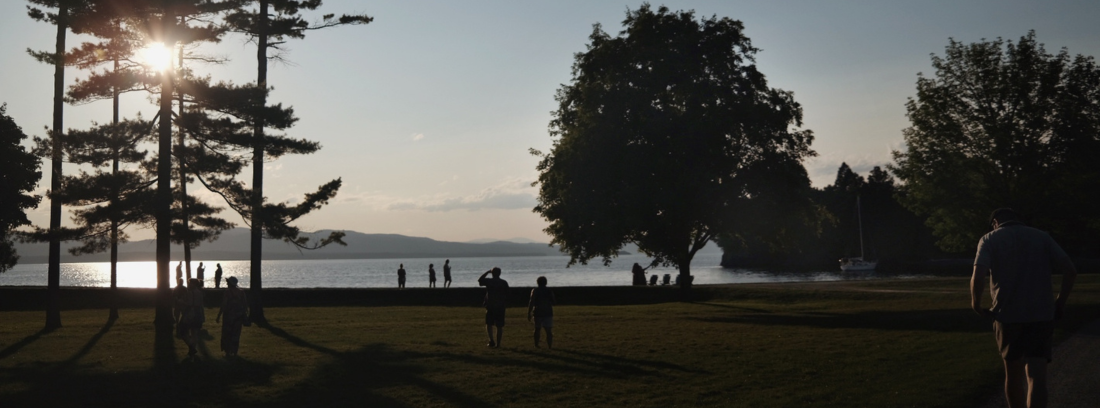
The majesty of Lake Champlain has set the pace of life in Burlington for generations. As we sit and enjoy the view from our windows, we acknowledge the history of the lake and the way it has guided life on its shores.
The story of Burlington begins at the water’s edge. For thousands of years, Lake Champlain has served as a pathway, a provider and a place of gathering. Let’s journey through the lake’s rich history and discover the enduring mark it has left on the city it defines.
A Lake Was Born
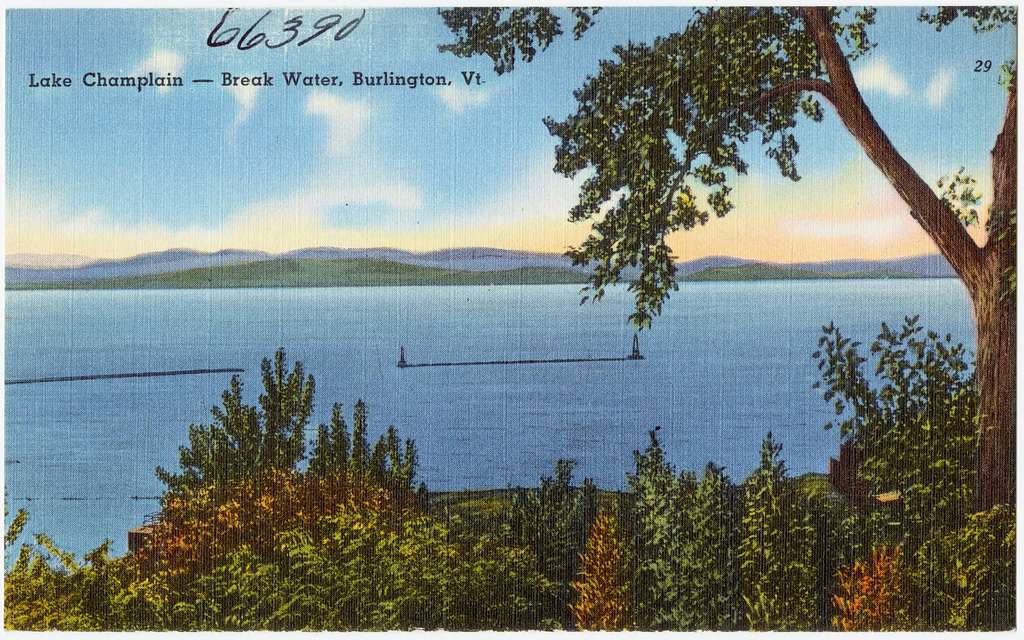
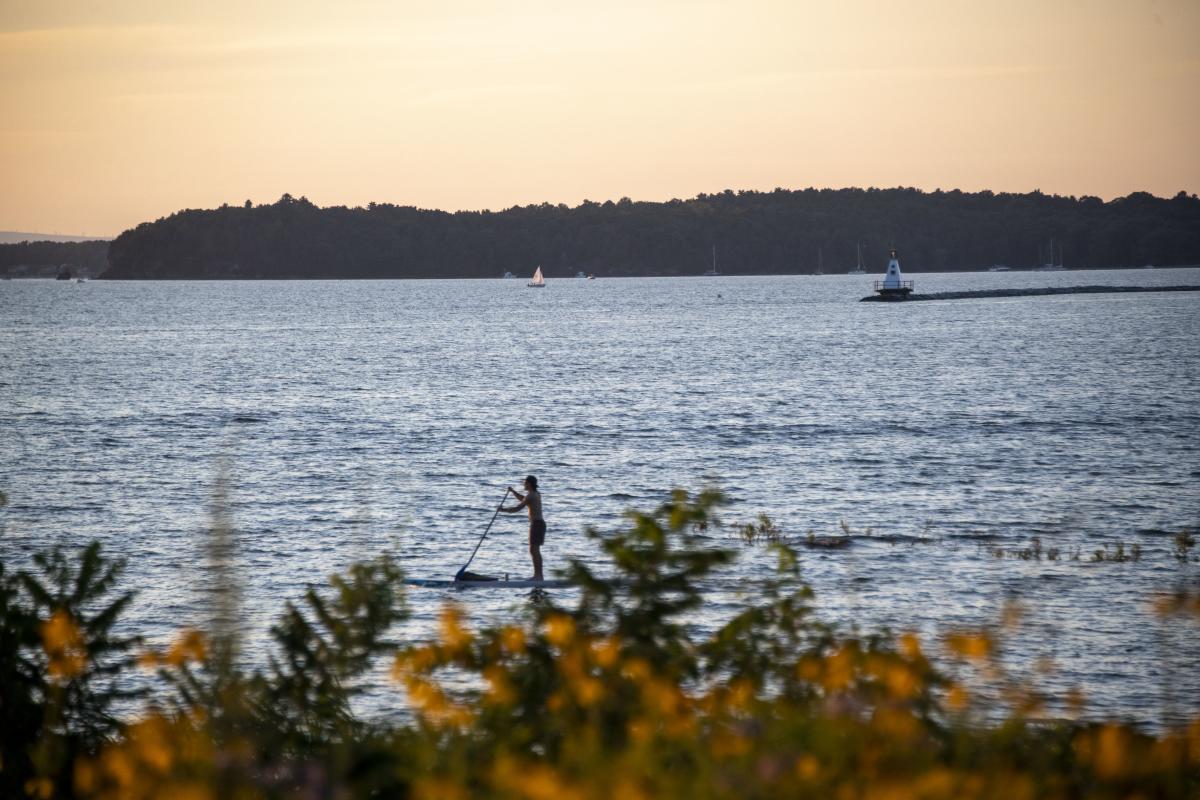
Lake Champlain came into existence thousands of years ago, as the Ice Age ended and the glaciers receded. The area that is now Vermont was completely covered in water, making up what is now referred to as the Champlain Sea. As the glaciers continued to melt and the earth’s crust rebounded, the water retreated further, the Adirondack and Green Mountains rose and Lake Champlain was formed.
The Land Becomes Home
12,000-9,000 years ago, during the Paleo Indian Period, people began to move into the Champlain Valley. The area started as a seasonal migration path for hunting and gathering, a role it held for thousands of years. Fast forward around 10,000 years into what is known as the Woodland Period and those inhabitants began to make the area a home by cultivating plants for food and settling into more permanent tribal villages.
Those groups of people and villages became multiple Native American tribes, including the St. Lawrence Iroquois, the Western Abenaki, the Mahican, and the Mohawk. The Lake became a central part of the history and culture of its people.
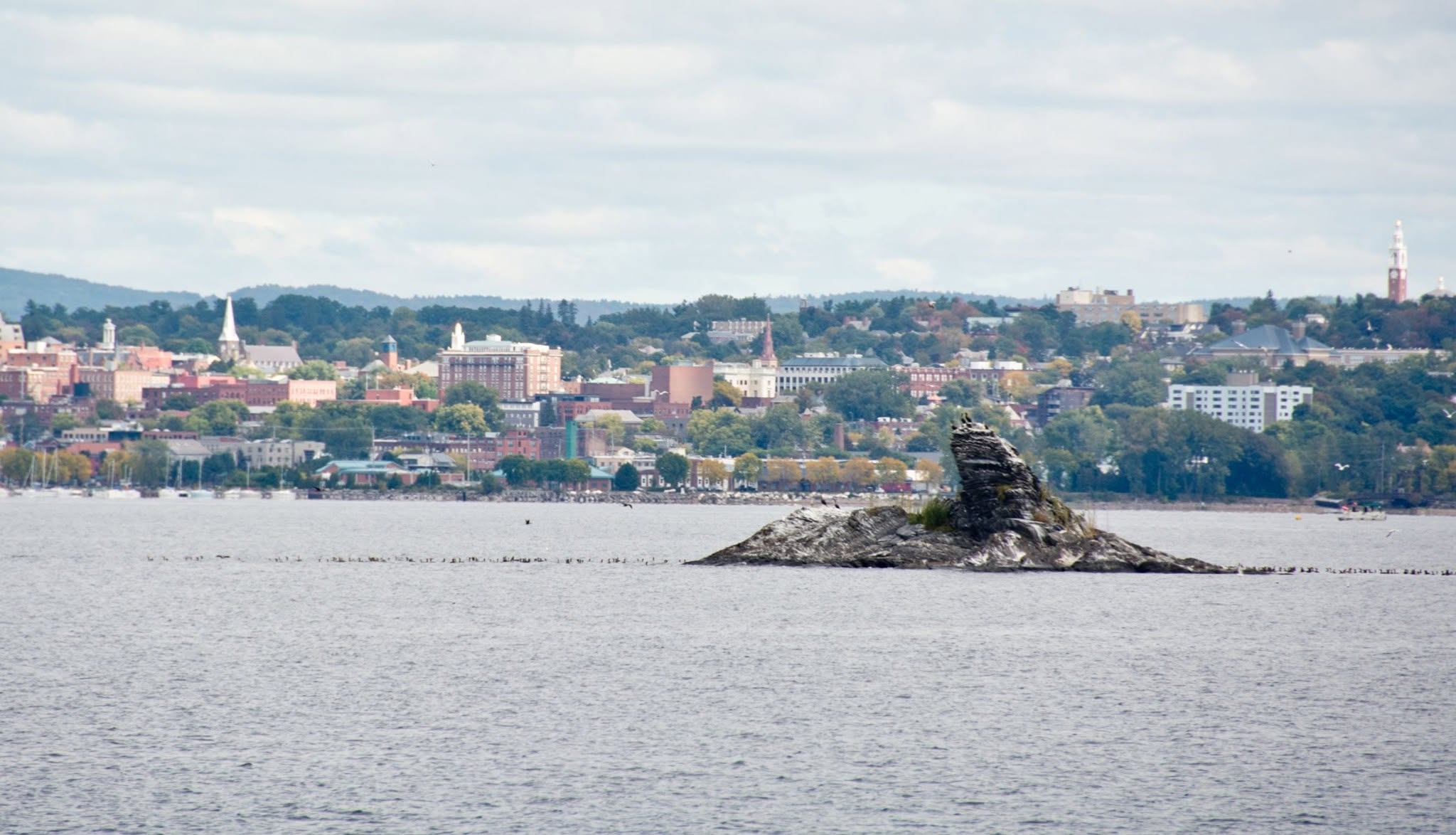
One of the most memorable legends of the Abenaki people can be seen from the windows as you relax in our lobby - that of Odzihozo, "He who Created Himself," or "The Transformer."
The Abenaki legend is that Odzihozo was a giant who emerged and began to grow his own head and arms from his body. His legs were slower to emerge and so he passed the time creating lakes, valleys and mountains. Odzohozo’s favorite of his creations was Lake Champlain, where he returned after completing his work. Once home, he turned himself to stone so that he could be permanently with his masterpiece. That home is a small rock island that now sits about halfway between Juniper Island and Shelburne Point.
That rock, which the Abenaki believe to contain the soul and spirit of Odzihozo and was later named Rock Dunder by the British who stumbled upon it, sits permanently in the Lake, a natural monument to its creator.
A Name is Declared
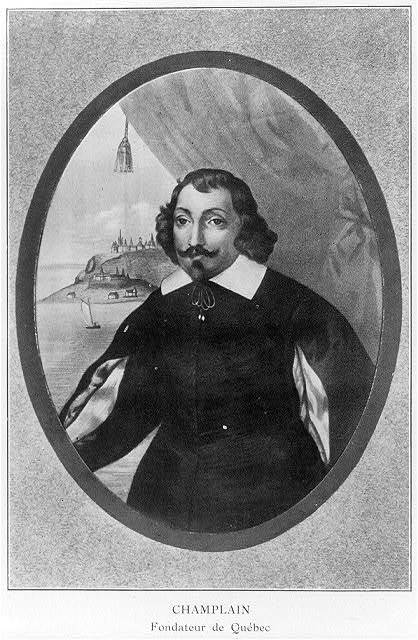
By the early 17th century, countless generations had lived, traveled, and traded along the lake’s waters. In 1609, explorer Samuel de Champlain arrived by canoe from present-day Quebec. What he found was a lake worthy of both map and memory. His writings captured the landscape for European audiences, the first written account of the region, and he leant his name to his discovery, becoming permanently woven into the story of Lake Champlain.
A Lake at War
In the years leading up to battle American independence, Lake Champlain became more than a waterway. It was a contested corridor and a vital passage through the wilderness that connected the New England colonies. Whoever controlled the lake controlled one of the most important routes between Canada and the colonies.
Lake Champlain officially entered the American Revolution in 1776 when a small American fleet gathered near Valcour Island under the command of Benedict Arnold. Outnumbered and outgunned, the Americans stood little chance against the British navy advancing south. What followed was a fierce battle now known at the Battle of Valcour Island. Though the Americans were defeated, their resistance came at a crucial cost to the British. The delay forced them to halt their advance for the winter, buying precious time for the revolutionary cause. A year later, that time helped set the stage for a pivotal American victory at Saratoga, a turning point in the war.
Travel and Trade
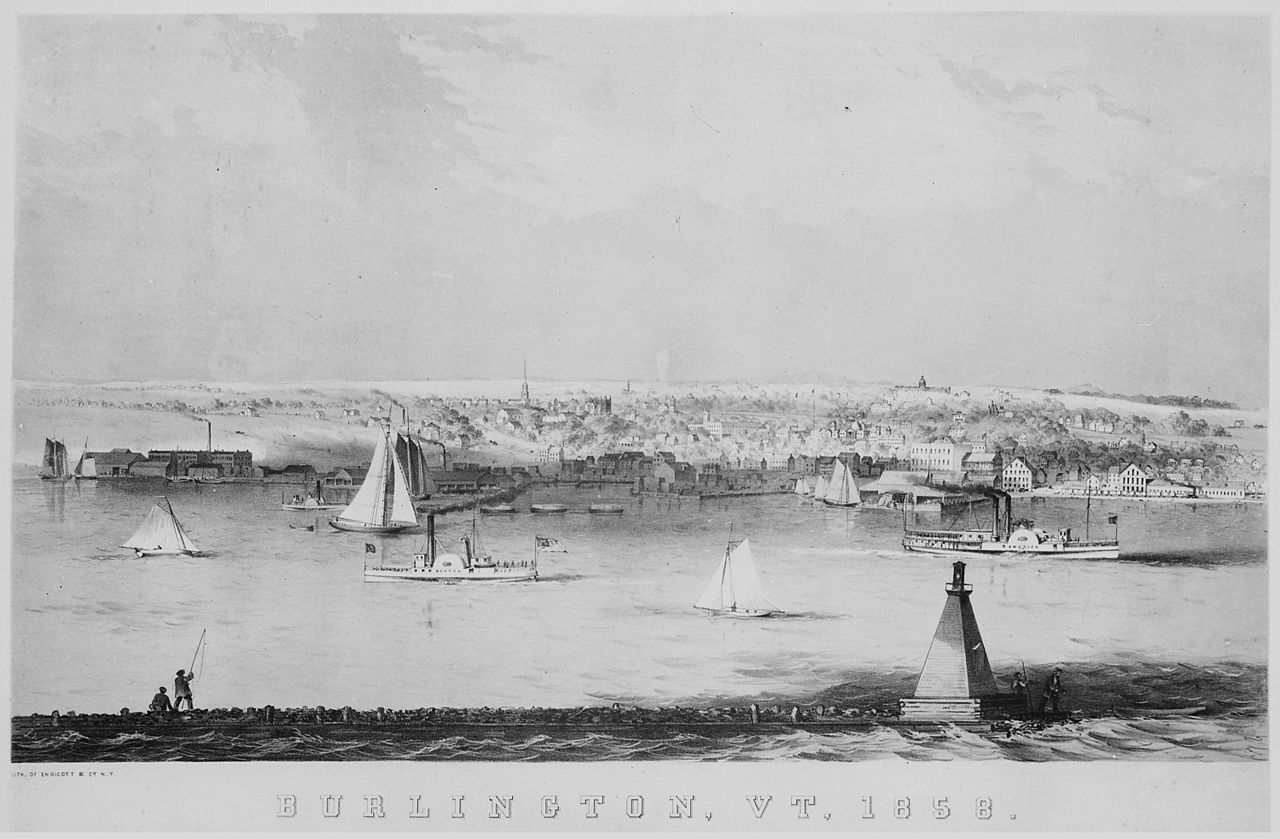
Lake Champlain took on another identity in 1809, when steamboats came to its waters. With the launch of the Vermont, the first steamboat to operate commercial service on any lake, the Champlain Valley found easy access to New York City for the first time via the Hudson River. Travelers flocked to the shores of the lake, exploring its natural beauty in the same way our guests experience as they visit today. The steamboats were the major way of traveling up and down the lake until the railroad arrived in the mid-1800s.
The last steamboat to operate on Lake Champlain, The Ticonderoga, took day trips up and down the lake until 1953. Two years later, the steamer was moved down the road to the Shelburne Museum, a place that holds the memories, history and stories of the lake and our area.

Lumber and A Growing Country
With the advent of the railroad and the creation of the Champlain Canal, Burlington became a leading lumber port in the United States as the growing nation built and built and built. By 1873, Burlington was the third largest lumber port in the nation — behind Chicago and Albany, N.Y. The newly-bustling town began to take shape as prosperity led to the Victorian architecture that still dots the landscape. It was also during this time that Burlington moved from a rural town to an emerging city, officially incorporating as a city in 1865.
The economic boom was powered by the more than 170 million board feet of lumber that was processed in Burlington, mostly along what is now Waterfront Park, just down the hill from us.
From Tool to Treasure — 1900 to present day
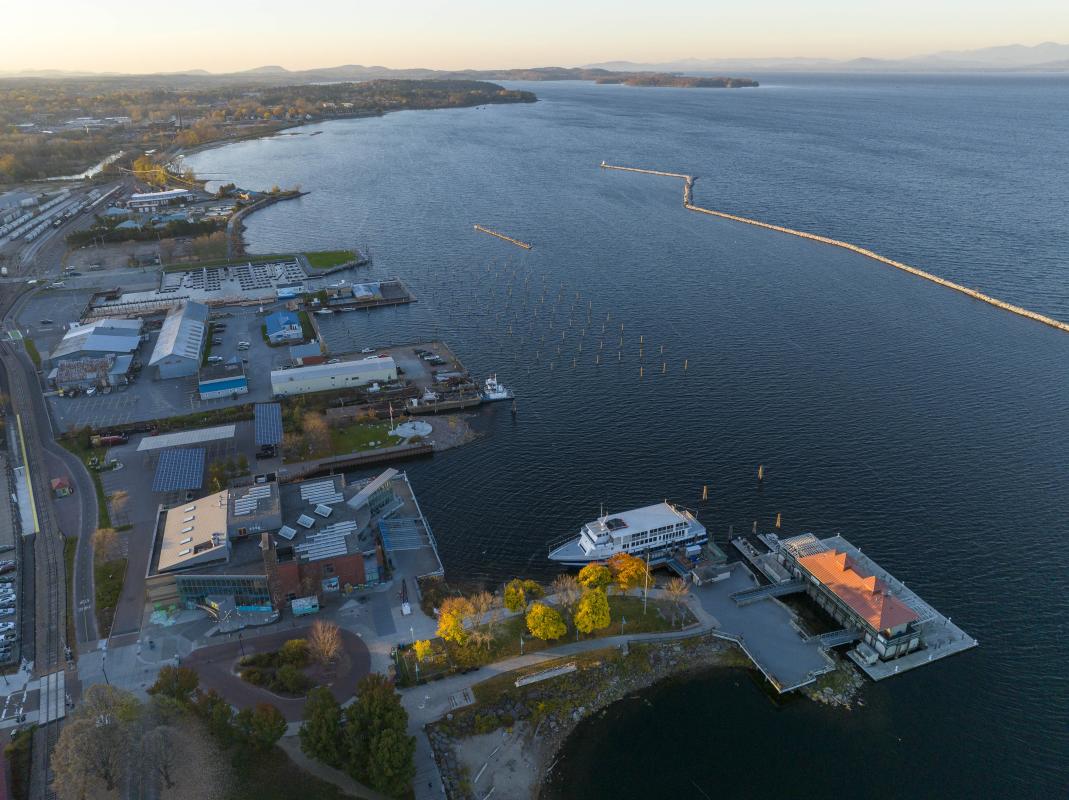
By the mid-20th century, the lumber industry had declined and left the shores of Lake Champlain and Burlington to start the next chapter of its story. After the lakeside was left with polluted sites, coal storage and industrial mess, the waterfront became inaccessible to the public for much of the 1970s and 1980s. In the 1990s, the city of Burlington began planning to prioritize parks and paths for public access and Waterfront Park was born.
Today, you can wander the shores of Lake Champlain on the Burlington Bikepath, enjoy festivals and concerts, and experience its natural beauty throughout the year. The lake has returned to its roots as a source of wonder for all who live and visit its shores.